Sara Mingorria – From territorial struggles to global comparative political ecology
Bridging territorial struggles and global comparative political ecology through feminist and participatory research.
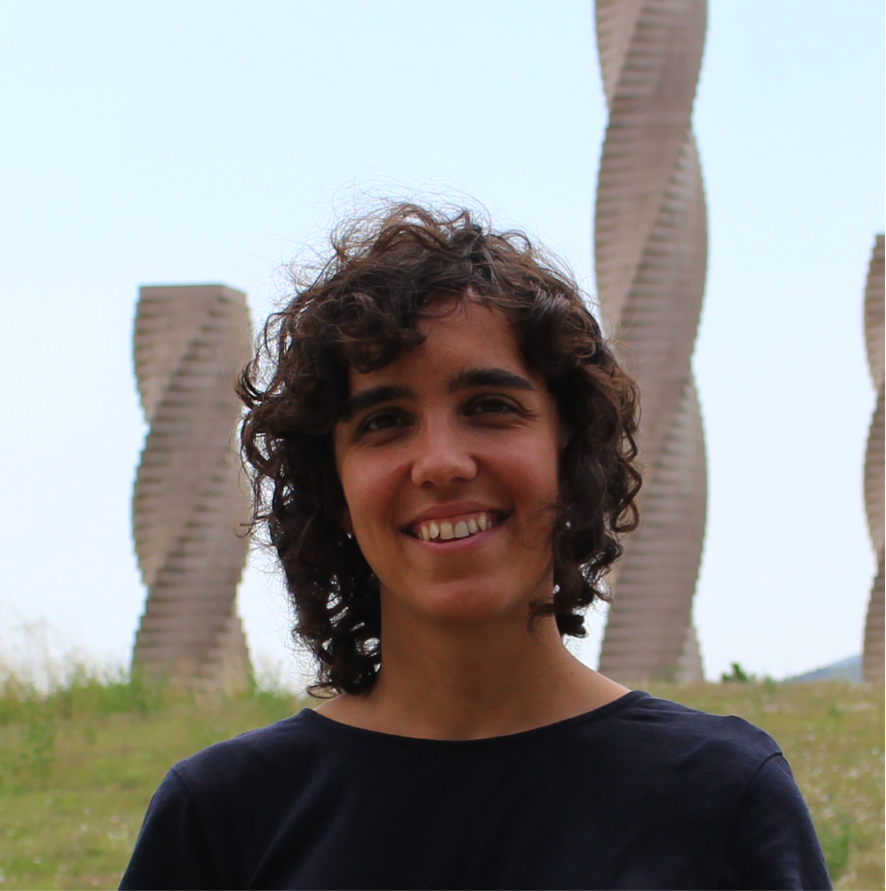
Political ecology is both my analytical framework and a collective commitment that structures my research and teaching. It has provided the conceptual language to articulate long-standing concerns about power, nature, inequality and resistance. Through feminist and participatory methodologies, I examine socio-ecological transformations and extractive processes across continents through in-depth case studies and comparative research, tracing dynamics from household and community levels to global political-economic structures. I understand research as part of broader collective struggles and seek to build bridges between research, education, activism and art.
I was born in the Global North, in a working-class neighborhood of Madrid, and injustices have mobilized me intellectually and in practice from early on. My first experience of activist-research emerged while working as an educator in a zoo, where I began to critically analyze and denounce the logic of human domination over nature as part of a university assignment at UAM (Madrid). At the same time, through fieldwork in Doñana in southern Spain, I became aware of hierarchies of knowledge and of the transformative potential of local and traditional ecological knowledge in conservation practices. Intuitively, I was already combining ecological, anthropological, economic and political perspectives, without yet naming it political ecology.
My master’s and doctoral research unfolded in Guatemala’s Polochic Valley, a region marked by violent land conflicts linked to oil palm and sugarcane expansion. Through feminist and participatory action research, I collaborated with Indigenous communities and local organizations to analyze extractivist processes, state violence and resistance strategies. Political ecology became the framework that allowed me to integrate agrarian studies, environmental sociology, ecological economics and political theory into a coherent lens connecting power, inequality and resistance.
This long-term engagement required navigating the intersections between activism and academic knowledge production in contexts of structural and direct violence, reinforcing my commitment to co-producing knowledge that is dialogical, socially relevant and politically situated. My research informed environmental policy debates, contributed to documenting human rights violations, and circulated through documentary productions and public media.
During my postdoctoral work with the EJAtlas project (ICTA-UAB), I deepened this trajectory through a more explicitly comparative political ecology. Through research in Indonesia and the collective work of mapping socio-environmental conflicts worldwide, I engaged in global comparative analysis that connects grounded territorial studies with broader patterns of extraction and resistance.
I approach political ecology not simply as an analytical framework, but as a situated practice embedded in collective struggles. Collaboration with movements such as Stay Grounded and Zeroport in Barcelona has grounded my research in debates around infrastructure expansion and degrowth. Working across diverse contexts has shaped my contributions through dialogue between Global North and Global South epistemologies.
Inside and outside academia, political ecology is also present in my everyday commitments. I have contributed to debates within the Barcelona School of Political Ecology, particularly around feminist political ecology, and co-founded FRACTAL, a feminist space for reflecting on positionality, ethics and care within academia. I also co-founded the environmental organization Mar de Tierras in Madrid and the agroecological cooperative La Noguera Medinaceli in Soria. Through these collective experiences, I have come to understand groups as living entities shaped by power dynamics, where facilitation helps create safer and more inclusive spaces.
Since becoming a mother in 2020, questions of care and everyday institutions have gained renewed relevance in my reflections. Across research and collective life, I continue to seek ways of placing life at the center while critically engaging with the structures that threaten it.