Sayan Banerjee: learning is a process
Sayan Banerjee is a researcher exploring the more-than-human political ecology of human-wildlife interactions and biodiversity conservation in India. Apart from this, he is also interested in the governance of ICCAs and their interaction with market-based conservation, gender and environment interlinkages, and environmental history. He currently serves as board member of the Social Science Working Group and Asia region, both under the Society of Conservation Biology.
Learning political ecology is a process. I was quite sure that I learnt political ecology during my coursework through lectures, reading volumes, journal articles, and other literature, but when I started fieldwork and subsequently my PhD, it dawned upon me that my learning was perhaps incomplete, or, rather did not start. Understanding the flow of power and questions of justice in the socio-ecological realities for a society like India which is as diverse as one can imagine is beyond one’s ability to grasp in a shorter time. Classical political ecology pedagogy often paints actors as permanent perpetrators and permanent victims which is only partly true, when seen through the ethnically, culturally, politically diversity of the Indian society.
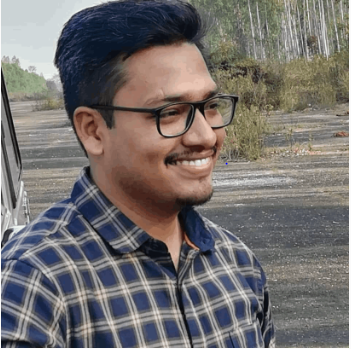
I started my fieldwork in the region of Assam which is situated at the northeastern part of India and I was looking into the political ecology of interactions between people and wild Asian elephants at the forest-farm interface. I framed political ecological questions of who gains and who loses and started searching for answers, and soon realized that perhaps such binaries were not so straightforward at all. Different communities in the multicultural setting that I was immersed into had different conceptions of power and justice. With ethnography of these communities, they taught me that historical situated-ness of these communities entangle with contemporary power structures and result into an asymmetric and dynamic political ecology which remains open and expanding. This is a kind of ‘vernacular political ecology’ that gets formed that is very specific to a place and its history and modulates human-environment relationship.
Paying attention to such vernacular forms are necessary, not only to understand how environmental costs and benefits are conceptualized and distributed, but also to develop place-specific actions. By being this dynamic, political ecology remains a fun-filled, hope-oriented framework to learn and engage with. The field will surprise the researcher and I am quite sure that by embracing this surprise, we can learn make our progress in learning, deconstructing and re-constructing political ecology.