Alberto Coronel Tarancón – Social metabolism, biopolitics and ecological breakdown
.
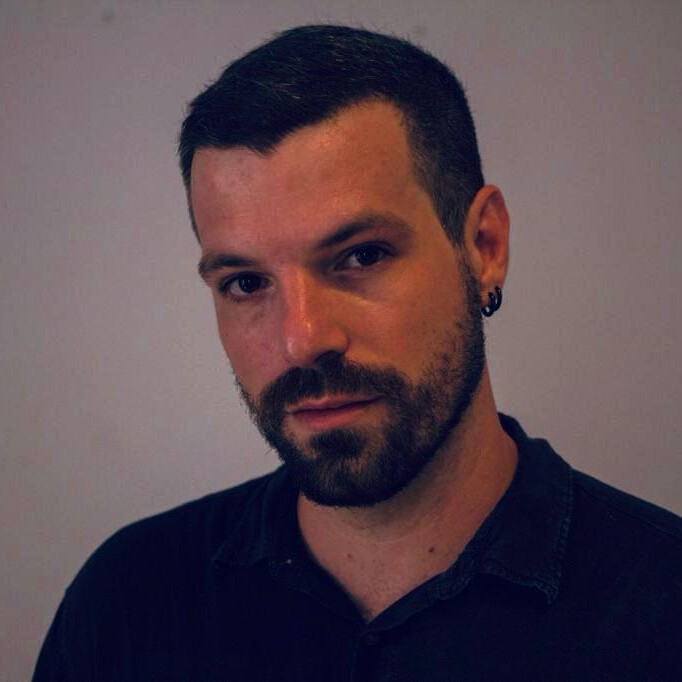
My name is Alberto Coronel, and I hold a PhD in Philosophy from the Complutense University of Madrid. I am currently on parental leave following the birth of my daughter. I am the coordinator of the Anthropocene Philosophy Lab (@degrowthlab) and a member of the Ecological Humanities Network (RHECO). My research lies at the intersection of philosophy, political ecology, and contemporary biopolitics. I have specialized in the study of capitalist social metabolism, with a particular focus on understanding the ecopathological dynamics of capital on planet Earth. My work seeks to critically examine how processes of accumulation, growth, and extraction reshape socio-ecological systems in ways that can be interpreted through pathological and immunological frameworks.
My intellectual trajectory began with a formative intuition during my undergraduate studies in philosophy: the division between natural sciences and social sciences is not a necessary one, but rather a historically contingent separation. From that moment on, I became convinced that contemporary philosophy must contribute to overcoming this divide and to rearticulating a unified understanding of knowledge capable of addressing the complexity of planetary crises. Motivated by this conviction, I pursued a Master’s degree in Epistemology of the Natural and Social Sciences, which allowed me to engage deeply with the conceptual and methodological foundations of both domains. Since then, my research has consistently moved in this direction, seeking to build bridges between scientific disciplines that are too often treated as separate.
In this effort to reconnect the natural and the social, I began to explore the use of physiological and pathological models as analytical tools for understanding human societies. This approach has informed several of my publications, including “Metabolismo e inmunidad capitalista. La inmunización del crecimiento ilimitado” (Isegoría) and “Repensando la biopolítica en el Antropoceno. Foucault, Esposito y la fisiología política de los metabolismos sociales” (Res Publica). In these works, I examine how concepts drawn from biology—such as metabolism, immunity, and homeostasis—can illuminate the functioning and dysfunctions of contemporary capitalist societies, particularly in relation to their tendencies toward expansion, self-preservation, and systemic imbalance. This line of inquiry has progressively led me to my current research, which conceptualizes capitalism as a pathological, and more specifically cancerous, process at the planetary scale.
After completing my doctoral dissertation, entitled “La crisis de la biopolítica en el siglo XXI,” I became increasingly involved with grassroots environmental groups. This engagement proved to be a turning point in my work, as it allowed me to test and translate theoretical frameworks into concrete communicative practices. In these contexts, I observed that physiological and pathological models are particularly powerful as tools of communication: not everyone is familiar with philosophical terminology, but everyone understands what it means to be a body that can fall ill, to experience imbalance, or to require care. This realization reinforced my commitment to developing a form of critical theory that is not only analytically rigorous, but also socially intelligible and politically effective.
More recently, my research has developed a new line of inquiry that approaches capitalism as a form of planetary cancer. In this context, I explore the analytical and conceptual transfers that can be established between oncology and degrowth studies. This involves investigating how notions such as uncontrolled proliferation, metabolic disruption, immune evasion, and systemic collapse can illuminate both the trajectory of global capitalism and the possibilities for its transformation. By framing capitalism as a pathological process, I aim not only to deepen theoretical understanding, but also to open new avenues for political imagination and intervention. Therefore, I see my work as closely aligned with POLLEN’s mission, particularly with regard to its commitment to fostering transdisciplinary approaches to political ecology, and to advancing transformative perspectives on socio-ecological crises. Through my engagement with degrowth, ecological humanities, and critical theory, I hope to contribute to the collective effort to drive a metabolic transition towards homeostatic societies.