Carly E. Nichols – Power, bodies and justice in contemporary agricultural transformations
My name is Carly Nichols and I am an assistant professor of geography at the National University of Singapore. My research examines the politics and practices of agricultural development policies…
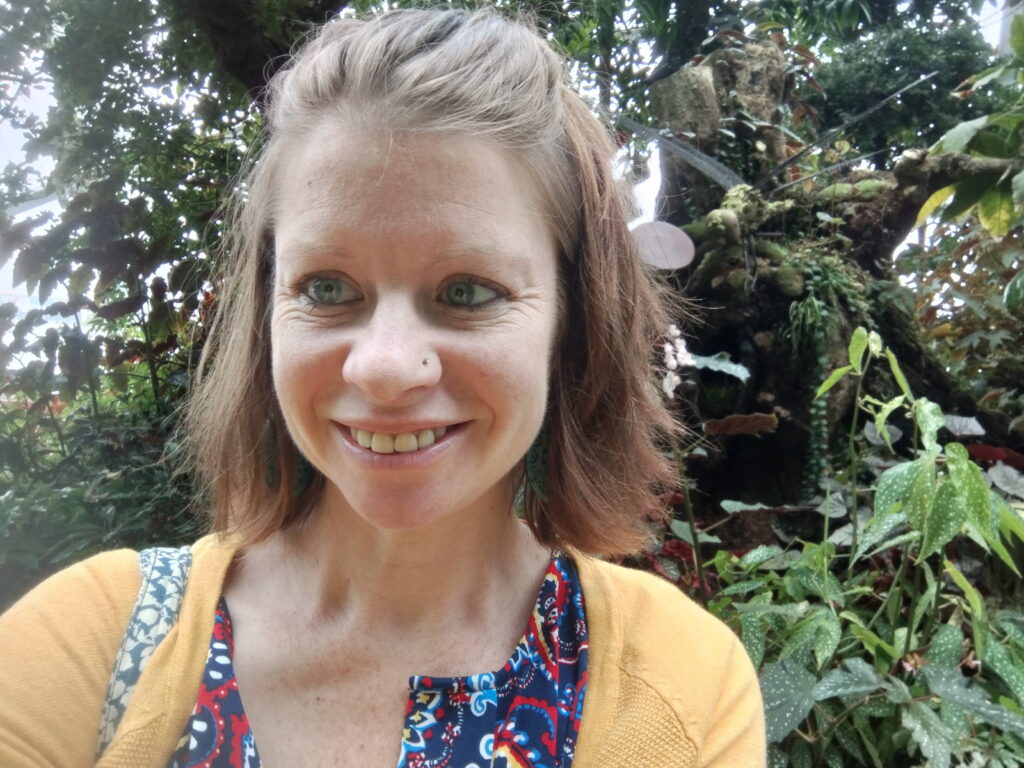
My name is Carly Nichols and I am an assistant professor of geography at the National University of Singapore. My research examines the politics and practices of agricultural development policies and projects in both South Asia and the US Midwest. I am a feminist political ecologist and I am always investigating the way power —material, discursive, and political economic— is constitutive of the ways agriculture is imagined and practiced across diverse sites.
I have used environmental justice frameworks to analyze power relations, as I find the language of justice to be legible in communicating critical findings to more powerful stakeholders. At the same time, I also draw on new materialist thinking, affect theory, and Indigenous anticolonial theory to understand the ways power is negotiated by individuals and communities and can never fully capture the nuances of human-nature relationships. I have taken a deep interest in what I call, “food-body” and “crop-body” relationships and see the body as a key —if often overlooked site— of agricultural knowledge production and decision-making. My most recent work examines the laboring body within agricultural assemblages and uses it to understand interventions around both nutrition/health and also movements to advance agroecology as a solution to global food system harms. I am also using this concept to investigate and unpack the phenomenon of abandoned agricultural land in the Nepali mid-hills as well as debates around de-agrarianization more broadly.
I believe my work thematically and practically aligns with the POLLEN mission. I often work with non-governmental organizations and other bodies that implement agricultural projects to communicate my research findings -many of which are often critical – making sure to anonymize all my research participants and ensure there are no negative repercussions by bringing their critiques and concerns to the implementing bodies. I also see my work as aligning with the mission of POLLEN in that I advance political ecological debates, methods, and theories within interdisciplinary discussions of how to make more just and equitable food systems. I deeply value the POLLEN community for its commitment to praxis and using theory to advance agendas for greater social and ecological justice.