Charlotte Hemingway – Tracing matter, energy and inequality across agrarian systems
.
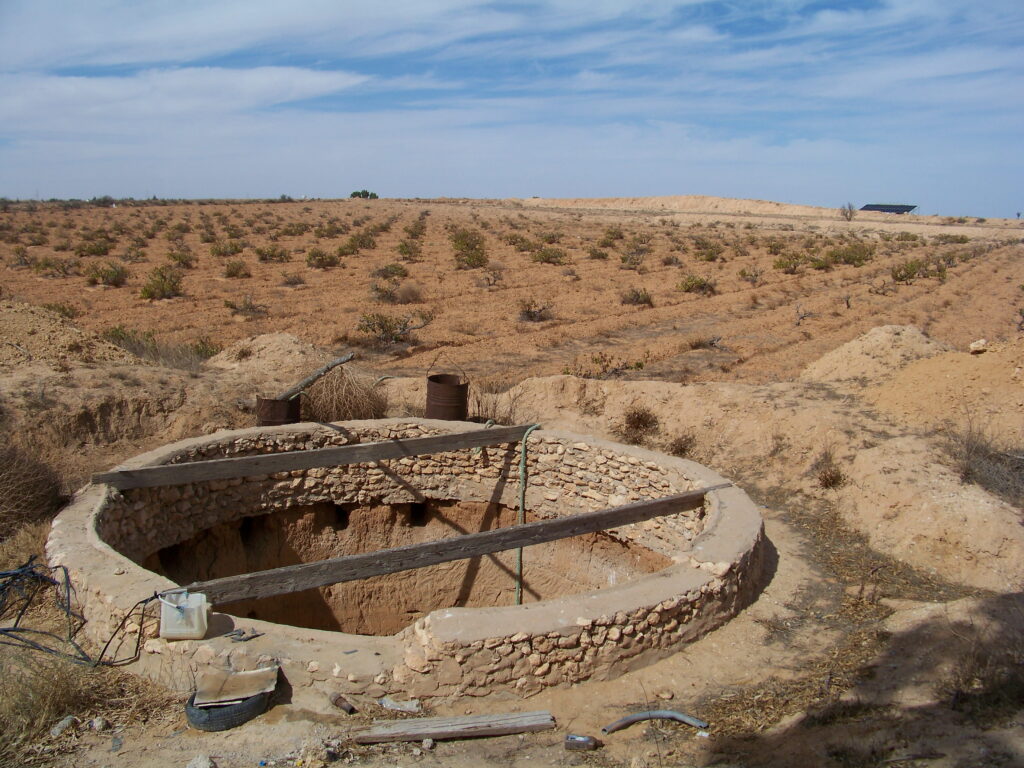
My name is Charlotte Hemingway, and I am a researcher at the French Agricultural Research Centre for International Development (CIRAD), where my work focuses on agrarian transitions and inequalities in agricultural systems in the Global South. My research lies at the intersection of comparative agriculture, political ecology and social metabolism, with a particular interest in (i) how transformations in agrarian systems are shaped by unequal social relations within agrarian societies, and (ii) understanding which categories of farmers benefit from, or are disadvantaged by, different forms of agrarian transition. Across my work, I seek to understand how access to and control over natural resources are structured by broader political-economic dynamics, and how these inequalities shape both environmental change and vulnerability, with a particular fondness for arid and semi-arid regions (as the photo perhaps suggests!).
My research trajectory initially developed through the comparative agriculture approach, which provided me with the conceptual tools to analyse the historical transformations of agrarian systems and the differentiation pathways of different types of farms over time. From the outset, I was particularly interested in labour relations and in unequal access to land, water and capital as key drivers of agrarian differentiation. This perspective led me to examine agricultural change not as a homogeneous process affecting all farmers equally, but rather as a deeply uneven transformation shaped by relations of power, production and accumulation.
During my doctoral research in India, I brought together comparative agriculture and the framework of social metabolism to analyse flows of matter and energy within agrarian systems, with one key particularity: representing these flows between different social categories of farmers within an agrarian system, rather than treating farmers of a territory as internally homogeneous units and representing flows between broad “agrarian society”, “livestock” and “cropping systems” boxes. This perspective allowed me to illustrate how apparently “natural” environmental changes (such as groundwater depletion or increasing greenhouse gas emissions), are inseparable from the social relations through which agricultural production is organised. By tracing how different groups of farmers contribute to and are affected by these environmental changes, my work sought to show that environmental problems are fundamentally socio-political questions, and that addressing them necessarily requires engagement with agrarian inequalities.
Following my doctorate, I conducted postdoctoral research in Tunisia at the Institut de Recherche pour le Développement (IRD), where I examined the differentiated impacts of farming systems on groundwater resources, as well as the uneven vulnerabilities generated by declining groundwater availability. In this work, I focused not only on patterns of groundwater resource depletion, but also on the social organisation of access to groundwater. In particular, I analysed informal and mediated forms of access through which farmers without boreholes obtain water from those who control groundwater infrastructure, highlighting the social relations and dependencies that structure access to increasingly scarce resources.
More recently, my research has engaged more explicitly with political ecology, extending the analysis of agrarian inequalities beyond the scale of the farm or territory in order to situate them within broader political-economic processes. This shift has led me to examine the role of state policies, stakeholder strategies, discourses and imaginaries in reproducing and legitimising unequal relations of power. At the same time, I have maintained a strong interest in the materiality of natural resources and in the contribution that quantitative approaches can make to political ecology. In particular, I am interested in understanding who is exposed to specific environmental problems, to what extent, and through which political and socio-ecological mechanisms such differentiated exposure is produced.
Overall, my work seeks to contribute to a form of political ecology that remains attentive both to the material dimensions of environmental change in agrarian systems and to the social relations through which these transformations are produced, experienced and contested within agrarian systems.